

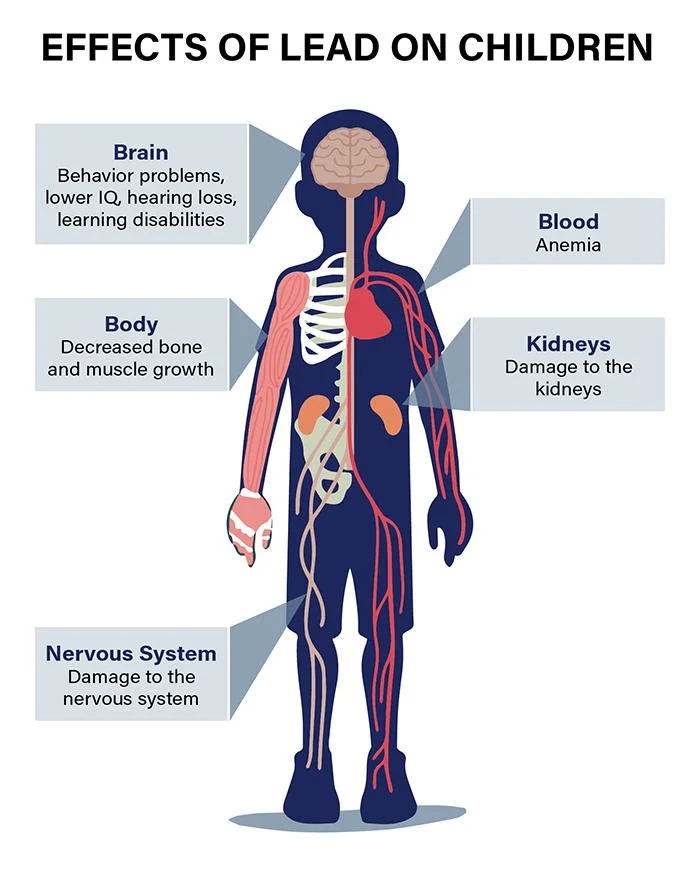
Health Effects of Lead
What is the County doing to Protect Customers?
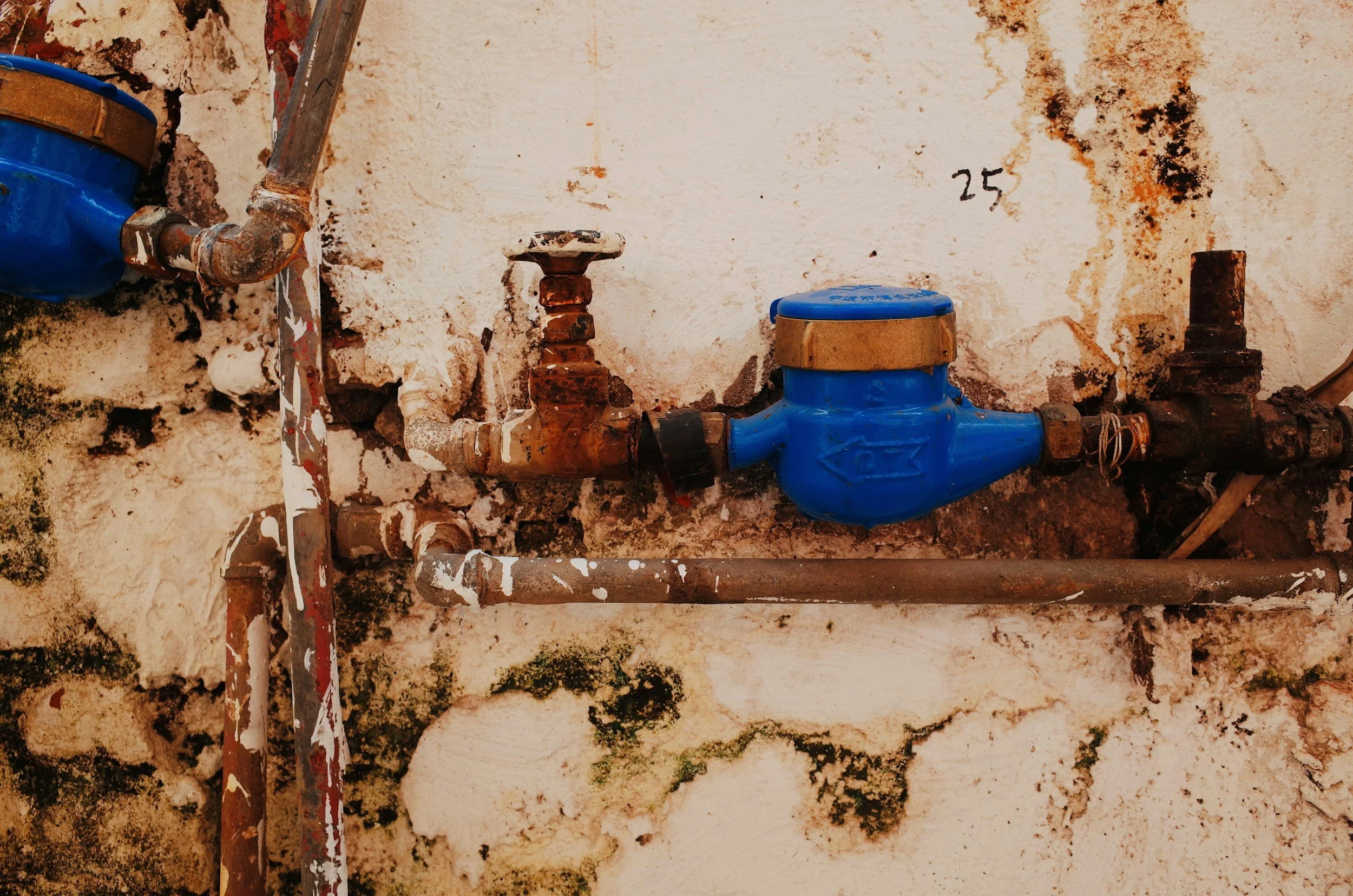
The County treats your drinking water according to federal and state standards to remove harmful contaminants. When water leaves the treatment plant, it does not have lead. Lead can enter drinking water when it travels through water service lines that contain lead and/or your home or building's internal plumbing.
Fulton County’s water is treated using corrosion control. This is a treatment process where small amounts of orthophosphates are added to the water. The treatment coats the inside of plumbing materials to prevent corrosion of metals, including lead. This treatment is very effective at reducing the risk of lead leaching into drinking water. However, even with corrosion control, if customers are away from their homes for several hours or days, lead may leach into the drinking water sitting in your lead pipe.
According to the EPA, no safe level of lead can be consumed or ingested.
Prolonged lead exposure can lead to health problems. Pregnant women, young children and elderly adults are most affected. In pregnant women, lead can be passed to the fetus through the placental membrane leading to premature birth and reduced growth. In children, low levels of lead exposure have been related to damage to the central and peripheral nervous system, learning disabilities, shorter height, impaired hearing, and impaired blood cell formation and function. For adults, high levels of lead exposure can cause damage to the kidneys, brain, and the nervous system, and affect the production of red blood cells that carry oxygen to all parts of the body.
If you have a lead service line, the lead from your pipe may leach into the water you drink. The EPA estimated that 10 to 20% of lead exposure in young children may come from drinking water. Infants who drink formula made with lead-containing water can get 40 to 60% of their lead exposure from drinking water. Humans do not absorb lead through the skin, so you do not need to filter your shower and bath water for lead.
To check your water line material, please visit the Checking and Reporting your Water Service Line Material webpage.
If you are concerned about lead in your drinking water, visit the EPA's Basic Information about Lead in Drinking Water webpage or follow the steps below to reduce your exposure.
How to Reduce your Exposure to Lead in Drinking Water
If you think you may have a lead water service line, you can take the below steps to decrease your lead exposure:

Replace your lead or galvanized steel water service line. If you have a lead water service line, you can hire a licensed plumber or contractor to replace your line. Please let the County know when you are replacing your line so we can coordinate the replacement of our portion of the service line to minimize service disruptions.
Before drinking water or making baby formula, take a shower, do laundry, or do a load of dishes to flush the pipes. Showering and flushing the toilet will help clear out your water service line if water has gone unused for more than 6 hours. This flushes the standing water and brings fresh water from the water main line. You can also run the tap for a short period of time, depending on the size of the property and the length of the water service line.

Use cold water for cooking, drinking, and making baby formula. Lead dissolves into hot water more easily than cold water. If you need hot water, draw cold water and then heat it. It is safe to shower, wash dishes, and do laundry with hot water. Boiling water does not remove lead.
Replace your home's internal plumbing that may have lead. Potential lead sources include lead pipes, lead-based solder, and brass fixtures and valves (including faucets). When buying new plumbing fixtures (faucets, valves, sinks, hose bibs, etc.), choose those that have zero-content meeting current "lead-free" requirements. Read the labels of new plumbing fixtures closely.
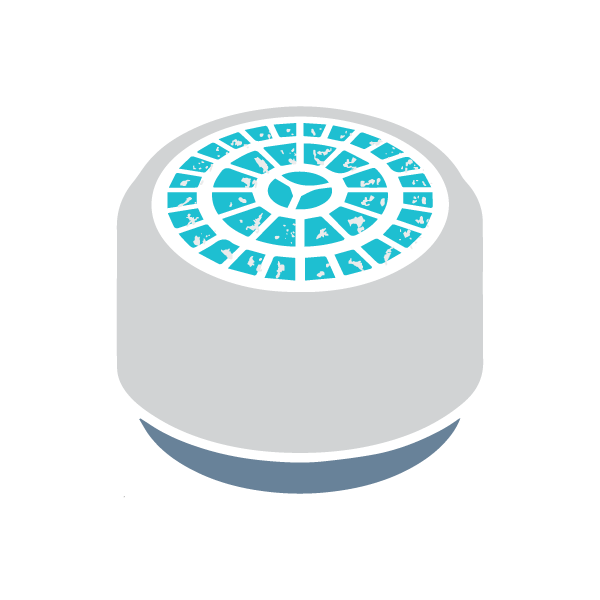
Remove and clean faucet aerator. Every 3 months, remove and clean aerators at the tip of faucets to remove build up.
Remove the aerator from all taps.
Rinse the aerator.
Run the water without the aerator for 3 to 5 minutes.
Replace the aerator
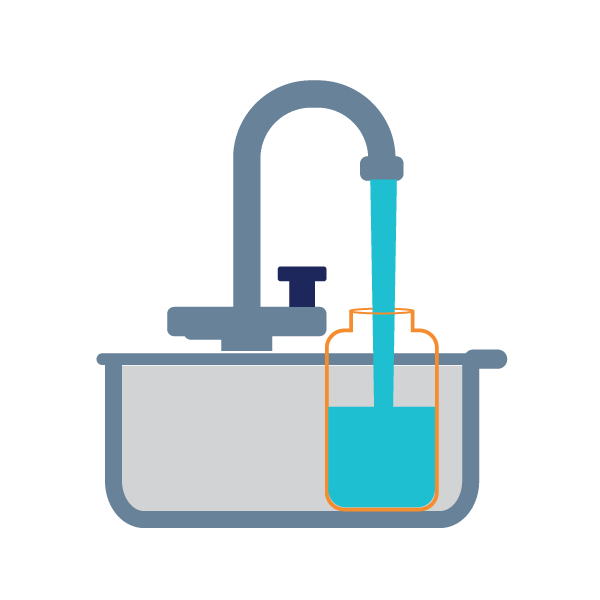
Test your water for lead. Fulton County is looking for participants for its next Copper-Lead Sampling Program. If you are interested and are a Fulton County water customer, please fill out the interest form here. This program has limited capacity. Signing up is not a guarantee that your water will be tested.
You can also test your water for lead using a state-approved laboratory. If the test shows a value above 0.010 milligrams per liter, contact the County for additional information on how best to protect yourself and your family.

Use filters. Consider using a water filter. Be sure the filter you choose (faucet and/or pitcher filter) is approved to reduce lead (NSF 53/42-certified for lead removal). Visit this link to learn more about water filters.

Test your child's blood for lead. Your local doctor or pediatrician can perform a blood test for lead and give you information about the health effects of lead. Visit the Georgia Department of Public Health’s Healthy Homes and Lead Poisoning Prevention website to learn more, including where you can test your child's blood.